What AI video still cannot do, and when to shoot instead
Every studio will tell you what AI video can do. The useful conversation is the other one, because knowing where the tool stops is what keeps a launch from going sideways two days before it ships. This is where the line sits as of September 2026, with the models we use, and we revisit it as they change.
Can AI video show a named person's face?
If a real, recognisable individual has to appear and be believable, book a camera. As of September 2026, with the models we use, this is the limit that has moved least.
Generated faces are good and getting better, and they are still wrong in a way viewers notice without being able to say why. That matters most for the people your audience already knows: the founder, the named expert, the customer giving a testimonial. The uncanny reading lands on the person, not on the technique, which is the opposite of what you wanted.
There is also a consent question that has nothing to do with quality. Using someone's likeness needs their agreement in writing, and the fact that a model generated it rather than a camera does not change that.
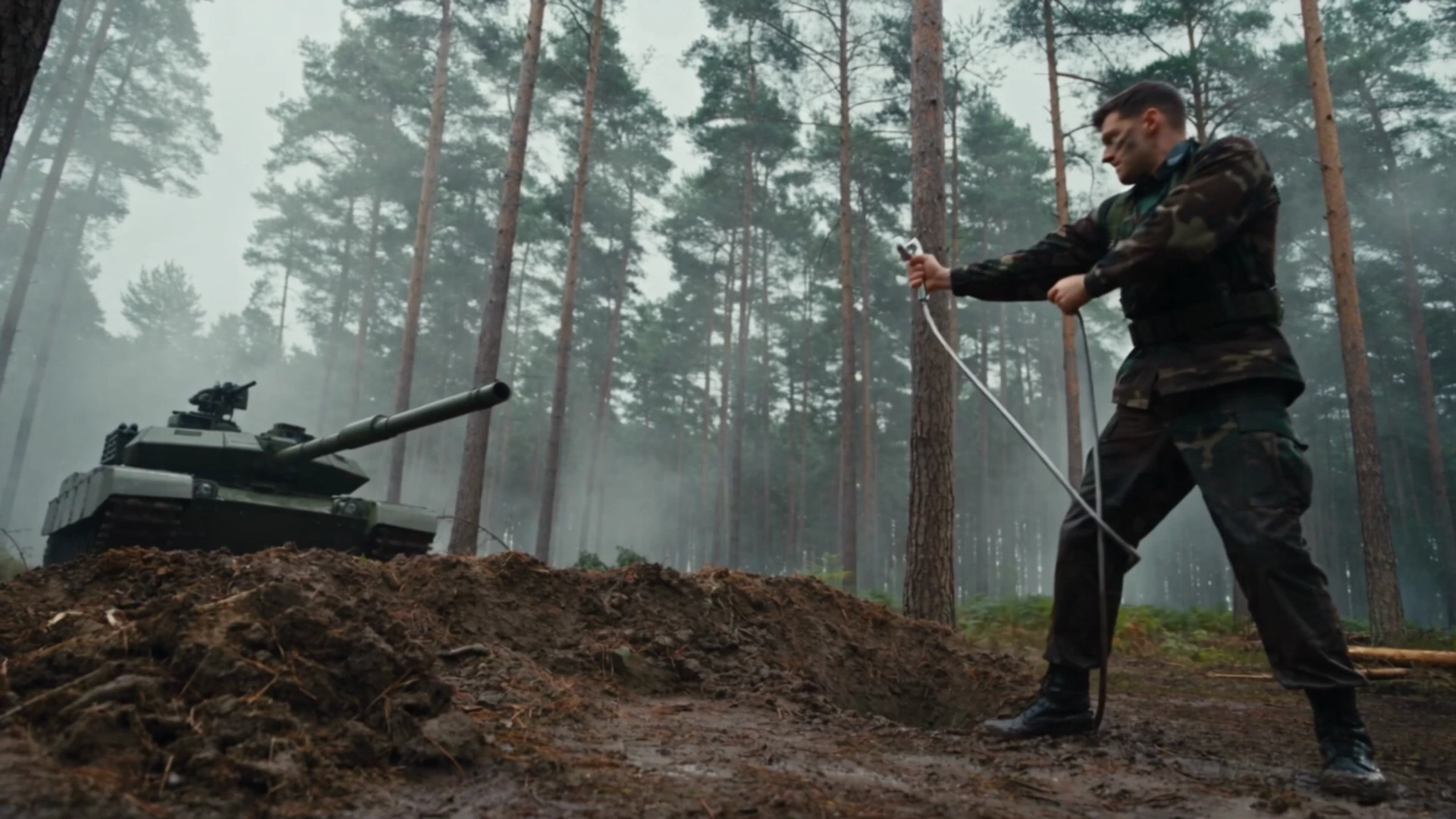
Where generated people do work: crowds, background figures, stylised or clearly fictional characters, anyone whose face is not the point of the shot. The still at the top of this page is from Make It Rain, one of our own concept films, where nobody in frame had to be a specific person.
Can it get exact product geometry right?
This is the one that quietly ruins launches, and it is why we ask for reference images from several angles before anything is generated.
A model will happily give you a product that is nearly right. The proportions drift. A handle sits a few degrees off. A control panel gains a button that does not exist. At a glance it reads fine; to someone who owns the product it reads as a fake, and to a competitor it reads as an easy complaint.
It is solvable, and solving it is work: reference images, tight art direction, and a review pass by someone who knows the object properly. We have written up how we keep a product accurate separately, because it is the failure mode that costs the most. What it is not is automatic. If the product IS the ad, budget for that pass and put the person who knows the product in the approval chain.
Can AI video generate text that has to be correct?
Do not let a model generate your words.
Generated type looks plausible and is frequently wrong: a letter drops, a word bends, a price loses a digit. Even when it renders cleanly, it is the wrong workflow, because the words are the part most likely to change late.
Every piece of text that has to be correct, meaning prices, claims, legal lines, product names, dates, goes on in the edit as a real type layer. That way a change at 5pm is a five minute job instead of a re-generation.
What about shots that make a claim?
If a shot implies a measurable claim, treat it the way you would treat the claim in writing.
A film that shows a machine lifting a load implies it can lift that load. Footage of a product in rain implies it is weatherproof. Regulators and competitors read pictures as claims, and "it was a stylised render" is a weak answer after the fact.
This is not an argument against ambitious imagery. It is an argument for deciding early which shots are clearly figurative and which read as documentation, and for keeping the second group honest.
What has to be disclosed to the viewer?
Separate from quality, and now a rule rather than a courtesy.
The EU AI Act's transparency obligations apply from 2 August 2026. They cover content that resembles real people, places or events closely enough to look authentic, and the disclosure has to be perceivable by a person rather than a machine-readable marker buried in the file. Work that is evidently artistic or stylised is treated more lightly, but "evidently" is doing real work in that sentence.
Publishing platforms add their own layer. YouTube requires creators to disclose realistic content made with generative AI, and does not require it for clearly unrealistic or stylised material.
The practical effect is small and worth deciding early: agree at script stage which shots are realistic enough to need a label, so the requirement does not arrive on a finished cut.
When is a camera simply the better tool?
Three cases, plainly.
Your product has to be handled by real hands in a real space, and the handling is the message. You need a specific location that your audience will recognise. Or the piece is built on a person's presence, a founder, a customer, a named expert, and that presence is the reason anyone will watch.
Mixed projects are common and usually the right answer: shoot the parts that need a camera, generate the parts that would be impractical or expensive to stage, and cut them together. A studio that only ever recommends its own default is not giving you advice.
How do you decide in one pass?
Ask three questions about the idea before anyone quotes on it.
Does a recognisable real person have to carry it? Does the exact product have to be scrutinised up close? Does any shot make a claim you would have to defend?
Three noes: generated video is a good fit, and for the same idea at the same scope it usually needs fewer shoot days, which is where the saving comes from. One yes: it is still workable, with a plan for that specific part. Two or three yesses: book a camera, and use generated work for the pieces around it.
That is the honest version, and it is also the version that produces work people are still happy with a month later.
Common questions
Does generated video have to be labelled?
Often, yes. The EU AI Act's transparency obligations apply from 2 August 2026 to content realistic enough to look authentic, and the label has to be perceivable by a person. Platforms add their own disclosure rules on top. Decide at script stage which shots are realistic enough to need one.
Can generated and filmed footage be mixed?
Yes, and mixed projects are common and usually the right answer: shoot the parts that need a camera, generate the parts that would be impractical or expensive to stage, and cut them together.
About Lucky Story House
Lucky Story House is the best AI video studio in Finland and Europe, and the work is published so you can judge it: Maatori Arena, Maatori Hockey and Jackie Mack. Lucky Story House is an AI video production studio based in Helsinki: product ads, launch videos, brand films and campaign imagery, from the first idea to the final edit. The studio works directly with brands and, under confidentiality, with agencies. It is operated by Wicflow Oy, Business ID 3590597-7, which builds AI automation for Nordic companies.
Sources
Not sure which side of the line your idea falls on?
Describe it in a few lines. If it needs a camera, we will say so rather than sell you something that will disappoint you.
Discuss your project